

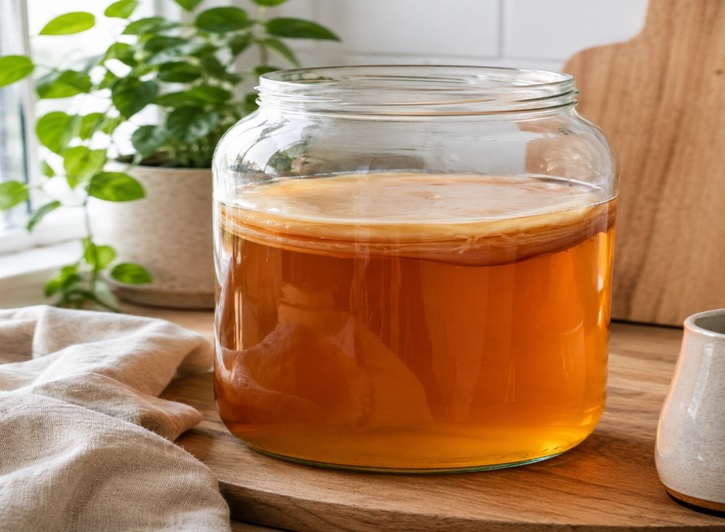
It looks a little strange. A rubbery disc floating in a jar of sweet tea, slowly transforming its contents into something tangy, fizzy, and alive. Kombucha might not win prizes for aesthetics during the brewing process, but what it produces — a probiotic-rich, enzyme-loaded, mildly acidic fermented tea — has made it one of the most popular functional beverages in Australia and around the world.
Kombucha is ancient. The earliest records trace it to Northeast China around 220 BCE, with widespread use throughout Russia and Eastern Europe long before it reached Western health food stores. What’s newer is our understanding of why it works — the complex microbiology of the SCOBY, the bioactive compounds produced during fermentation, and the growing body of research into fermented beverages and gut health.
This guide covers all of it: the science of kombucha fermentation, the health considerations, how to brew your own at home, and what to look for in quality starter cultures.
What Is Kombucha, Exactly?
Kombucha is a fermented beverage made from sweetened tea (usually black or green) and a SCOBY — a Symbiotic Culture of Bacteria and Yeast. The SCOBY is a living, layered mat of bacteria and yeast held together in a cellulose matrix. It acts as both the inoculant and the physical structure that keeps the fermentation community in place.
During the fermentation process, the yeast fraction metabolises sucrose into glucose and fructose, then ferments the glucose into ethanol and carbon dioxide. The bacterial fraction — predominantly acetic acid bacteria and various lactic acid bacteria — converts the ethanol into acetic acid (giving kombucha its characteristic tartness) and produces a range of other organic acids, B vitamins, and bioactive compounds. A quality organic kombucha SCOBY carries a robust, diverse microbial community built through generations of cultivation — a significant quality variable.
The resulting beverage is mildly acidic (typically pH 2.5–3.5), lightly effervescent, low in residual sugar (when properly fermented), and contains live microbial cultures alongside organic acids including acetic acid, glucuronic acid, gluconic acid, and small amounts of L-lactic acid.
The Science Behind the SCOBY
The microbial complexity of kombucha is often underappreciated. Analysis of traditional kombucha SCOBYs using modern sequencing techniques has identified dozens of bacterial and yeast species across different cultures. The bacterial fraction is dominated by Gluconobacter, Acetobacter, and various Lactobacillus species. The yeast fraction commonly includes Zygosaccharomyces, Brettanomyces, and Saccharomyces species.
This diversity matters. Different microbial communities produce different metabolite profiles — which is why kombucha brewed from an heirloom or organically cultivated SCOBY often has a more complex flavour and a broader range of bioactive compounds than kombucha brewed from a thin, commercially produced starter.
The cellulose pellicle (the physical SCOBY mat) also serves a functional purpose: it acts as a protective barrier against environmental contamination and maintains the spatial organisation of the microbial community during fermentation. A healthy SCOBY grows a new layer with each fermentation cycle — a visible indicator of a thriving culture.
Kombucha in Australia: Quality Varies Enormously
Walk into any health food retailer across Australia and you’ll find a wide range of bottled kombucha. But there’s a significant quality spectrum. Many commercial kombucha products are pasteurised after fermentation — which kills the live cultures that define the beverage’s probiotic profile. Others are diluted, heavily sweetened, or flavoured with artificial additives. For those serious about the health benefits, kombucha starter cultures Australia-wide are the foundation of genuine home brewing.
Home-brewed kombucha offers complete control: you choose the tea base (organic black, green, white, or oolong), the sugar type and quantity, the fermentation duration, and the temperature. The result is a genuinely living product with intact microbial populations — not a pasteurised facsimile.
The rising interest in home brewing has been matched by a growth in specialist suppliers offering organic, heirloom-quality cultures alongside guidance on the fermentation process. This is fundamentally different from the DIY culture of a decade ago, where starter SCOBYs were often passed between friends with minimal quality control.
Starting Your Kombucha Brew at Home
The basics are straightforward. You need a SCOBY with starter liquid, sweetened tea, a glass vessel, a breathable cover, and patience. The first fermentation (F1) typically takes 7–14 days at room temperature (ideally 22–26°C in Australian conditions). A complete step-by-step guide to making kombucha at home covers everything from vessel selection to flavour development and common troubleshooting.
First Fermentation (F1)
F1 is where the primary fermentation occurs. The SCOBY ferments the sweetened tea over 7–14 days, consuming most of the sugar and producing the characteristic acidity and light effervescence. The longer the fermentation, the more acidic and less sweet the final product. Taste regularly from day 7 to find your preferred balance.
Second Fermentation (F2)
Second fermentation is where the magic of natural carbonation happens. After F1, the kombucha is bottled (in swing-top or screw-top glass bottles) with added fruit juice, fruit pieces, ginger, herbs, or other flavourings. The residual yeast and small amounts of residual sugar produce carbon dioxide in the sealed bottle over 1–3 days at room temperature, creating natural effervescence.
The result — a naturally sparkling, flavoured kombucha — is significantly more complex and interesting than anything you can buy commercially. It’s also the point at which home brewing becomes genuinely creative.
Kombucha Kits: The Easiest Way to Get Started
For those new to home brewing, a kombucha starter kit takes the guesswork out of the initial setup. A quality kit provides the SCOBY and starter liquid, tea, sugar, and clear instructions — everything needed to produce a first batch within two weeks. Beyond the initial kit, the ongoing costs of home brewing are minimal: tea, sugar, and optional flavourings for second fermentation.
For anyone managing their gut health seriously, producing 1–3 litres of fresh kombucha per week becomes a simple, sustainable routine. The SCOBY grows with each fermentation cycle, eventually producing ‘hotel’ SCOBYs that can be shared, composted, or used to start a second continuous brew.
Health Considerations and the Evidence Base
The evidence base for kombucha specifically — as distinct from the broader literature on fermented foods and probiotics — is still developing. Most human clinical research on fermented beverages has focused on kefir, and much of the kombucha research is preclinical.
What is established: kombucha is a source of live microbial cultures (in unpasteurised form), organic acids (with demonstrated antimicrobial properties in vitro), B vitamins, and antioxidants from the tea base. The acidity of kombucha (pH ~3) creates an inhospitable environment for many pathogenic organisms. And the fermentation process significantly reduces the original sugar content compared to the starting sweet tea.
Anecdotally, regular kombucha consumption is associated with improved digestion, reduced bloating, and increased energy — consistent with the general benefits attributed to fermented food consumption. The key is consuming genuinely live, unpasteurised kombucha, which home brewing consistently delivers.
For those with compromised immune function, liver disease, or alcohol sensitivity (kombucha typically contains 0.5–3% alcohol), consultation with a healthcare professional before regular consumption is advisable.
Organic Kombucha: Why It Matters for Flavour and Microbiome Quality
Choosing organic kombucha starter cultures and ingredients matters for two reasons. First, organic tea contains higher concentrations of polyphenols — the antioxidant compounds that both feed the SCOBY’s bacterial fraction and contribute to kombucha’s bioactive profile. Second, avoiding pesticide residues in the fermentation substrate reduces the risk of disrupting the delicate microbial balance of the SCOBY.
Kombucha brewing rewards the same approach as any fermented food: quality inputs produce quality outputs. An organic, heirloom-quality SCOBY brewed with organic tea and filtered water will consistently outperform a commercially sourced culture in a chlorinated tap water base.
Conclusion
Kombucha is one of the most accessible entry points into the world of home fermentation — and one of the most rewarding. The investment is minimal, the learning curve is gentle, and the ongoing practice connects you to a fermentation tradition that predates modern medicine by millennia.
More importantly, it works. A living kombucha, brewed from a quality SCOBY with care and consistency, delivers a genuinely functional beverage that supports gut health in ways no pasteurised, shelf-stable alternative can match. Start with a good culture, follow the process, and let time do the work.